
Protein Expression & Detection
From high-sensitivity detection to spatial localization — a complete solution for precisely quantifying target protein expression.
Co-IP Assay
Co-immunoprecipitation (Co-IP) is a classic molecular method to study protein interactions based on antigen–antibody specificity. Under non-denaturing conditions it captures the natural "bait-prey" complex in cells, overcoming the inability of in vitro assays (e.g., Pull-down) to reflect physiological interactions. It is specific, credible, and relatively simple, and can both verify known interactions and screen unknown partners by mass spectrometry—widely used in signaling, complex composition, and disease mechanisms. Co-IP best preserves native conformation and interaction state, making it essential in life-science research.
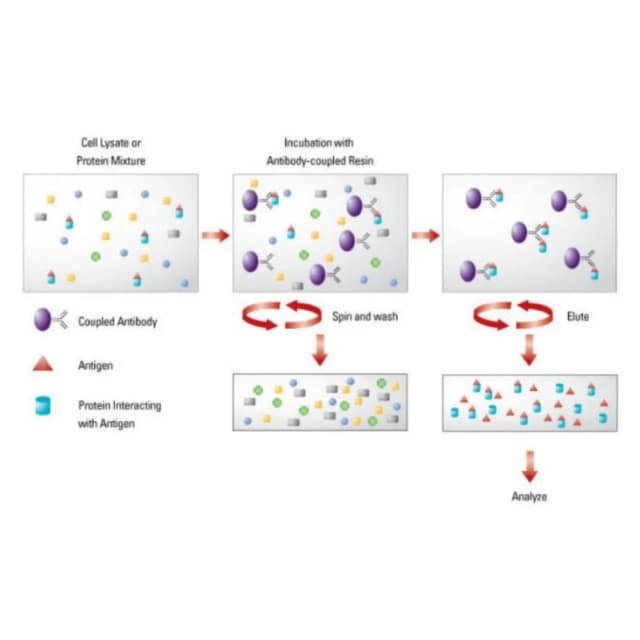
Principle Introduction
Co-IP uses a specific antibody to capture the bait protein; through physiological interaction it co-captures the prey. A mild non-denaturing lysis buffer (e.g., NP-40, Triton X-100) extracts total protein without disrupting interactions. Anti-bait IP-grade antibody is added and incubated at 4℃ to form an antibody–bait complex; Protein A/G beads bind the antibody Fc, precipitating the antibody–bait–prey complex. After washing away non-specific proteins, the complex is eluted and analyzed by Western blot (known prey) or mass spectrometry (unknown prey).
Literature
Cell published "Interfamily co-transfer of sensor and helper NLRs extends immune receptor functionality between angiosperms." Rice lacks a resistance gene against bacterial leaf streak, while pepper (Solanaceae) has an NLR recognizing the pathogen; transferring pepper Bs2 alone failed because the signal cannot be decoded in distant crops. Based on sensor–helper NLR cooperation, the team hypothesized that pairing the sensor NLR (Bs2) with a helper NLR (NRC from tobacco) is required to reconstruct immunity. To prove the cross-species pathway assembled in rice, direct evidence of Bs2–NRC interaction was needed. Co-IP was central: co-expressing tagged Bs2 and NRC in transgenic rice, IP directly showed a stable complex, providing key molecular-interaction evidence. The receptor pair then activated rice immunity with strong resistance and no agronomic penalty.
Sample Requirements
>1×10⁷/sample, PBS-washed, snap-frozen -80℃, dry ice; note cell line and treatment.
>0.5g/sample, PBS-rinsed, snap-frozen -80℃, dry ice; specify tissue.
>1g/sample, snap-frozen -80℃, dry ice; remove cell-wall interference (grind/filter).
>5×10⁶ cells or 0.3g, provide tag info (FLAG, GFP) and validation report, -80℃, dry ice.
Deliverables
Co-IP raw data
WB maps of Input, IgG control, and IP; band grayscale quantification.
Interaction report
conclusion on interaction, false-positive exclusion vs controls, band comparison.
Technical documentation
optimization tips (lysis, antibody concentration), troubleshooting; for MS, protein ID list and bioinformatics report.
FAQ
① pre-block beads with total protein 10 min; ② wash more (3–4×) or raise salt; ③ lower antibody amount; ④ use homologous Normal IgG control.
① low bead–antibody efficiency (switch beads or crosslink); ② mild elution (denaturing elution or concentrate); ③ insufficient input.
① combine in vitro Pull-down with purified proteins; ② construct bait truncations to map domain; ③ use BiFC for in-cell verification.
