
Protein Expression & Detection
From high-sensitivity detection to spatial localization — a complete solution for precisely quantifying target protein expression.
Real-Time PCR (qPCR) Analysis
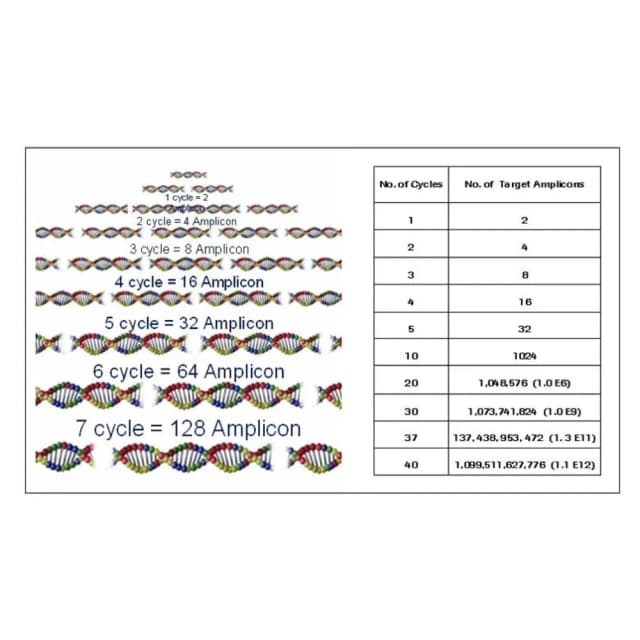
Real-time quantitative PCR (qPCR) is a nucleic-acid quantification technique developed from conventional PCR that monitors fluorescence in real time during amplification for precise quantification of template abundance. It tracks accumulating fluorescence to quantify starting template DNA, with the Ct value—the cycle at which fluorescence crosses threshold—as its core: less template means more cycles and a higher Ct. Overcoming qualitative/semi-quantitative limits of traditional PCR, qPCR combines high sensitivity, specificity, and accuracy with speed, detecting copies as few as a few. It is widely used in gene-expression differential analysis, pathogen nucleic-acid detection, genetic-engineering validation, and transgenic-component identification, and is a core technique in molecular biology, medical diagnostics, and agricultural research—requiring no post-electrophoresis, reducing contamination risk, and improving reproducibility.
Principle Introduction
qPCR tracks amplification via real-time fluorescence. By labeling method it splits into SYBR Green dye and TaqMan probe assays. SYBR Green binds the minor groove of dsDNA, weakly fluorescent alone but >10× brighter when bound; as dsDNA product accumulates, fluorescence rises and is monitored for quantification. TaqMan uses an extra probe with a 5′ reporter and 3′ quencher; intact probe quenches the reporter, but the 5′→3′ exonuclease activity of Taq during extension hydrolyzes the probe, separating reporter from quencher and releasing fluorescence proportional to product amount.
Literature
Rice published "The Mediator Subunit OsMED16 Interacts with the WRKY Transcription Factor OsWRKY45 to Enhance Rice Resistance Against Magnaporthe oryzae." qPCR confirmed the Mediator-subunit gene OsMED16 is induced by blast infection; further qPCR showed that in Osmed16 mutants a set of key diterpenoid phytoalexin biosynthesis genes dropped sharply, linking their loss to the susceptible phenotype. In OsMED16-overexpressing plants these and OsWRKY45/OsWRKY62 were affected. Yeast one-hybrid and ChIP showed OsMED16, OsWRKY45, and OsWRKY62 form a ternary complex on target promoters, and qPCR again verified that this complex activates downstream biosynthesis genes—building the clear conclusion that the OsMED16-OsWRKY45 complex enhances rice resistance by up-regulating antibacterial synthesis genes, highlighting qPCR's key role in expression quantification and mechanism dissection.
Sample Requirements
>0.03g/sample, snap-frozen in liquid N2, -80℃, dry ice, avoid freeze–thaw.
>0.1g/sample, snap-frozen, -80℃, dry ice.
>0.02g/sample, snap-frozen, -80℃, dry ice.
>200μL/sample, -80℃, dry ice, no freeze–thaw.
>1×10⁵/sample, washed with PBS, centrifuged, snap-frozen -80℃, dry ice.
RNA ≥200ng/μL, 260/280≈2.0; cDNA ≥50ng/μL, -20℃, cold pack.
Deliverables
qPCR raw data
amplification and melting curves, Ct-value records per sample/control.
Quantification results
absolute quantification (copy number/concentration for pathogens); relative quantification via ΔΔCt with fold-change bar charts vs control (=1).
Technical documentation
primer sequences, reaction setup, cycling parameters, software/method notes for reproducibility.
FAQ
Indicates non-specific amplification or primer dimers; redesign primers, tune concentration (0.1–1.0 μM), optimize annealing via gradient PCR, or dilute template.
① calibrate pipettes; ② mix thoroughly; ③ uneven plate temperature—change instrument or layout, increase biological replicates.
SYBR Green is cheap and simple for routine quantification but less specific; TaqMan offers higher specificity/accuracy for pathogen or transgenic detection at higher cost and design difficulty.
