Metabolomics
Capture the direct signals of phenotypic change through precise metabolite quantification — a direct readout of physiological status.
TCM Metabolomics
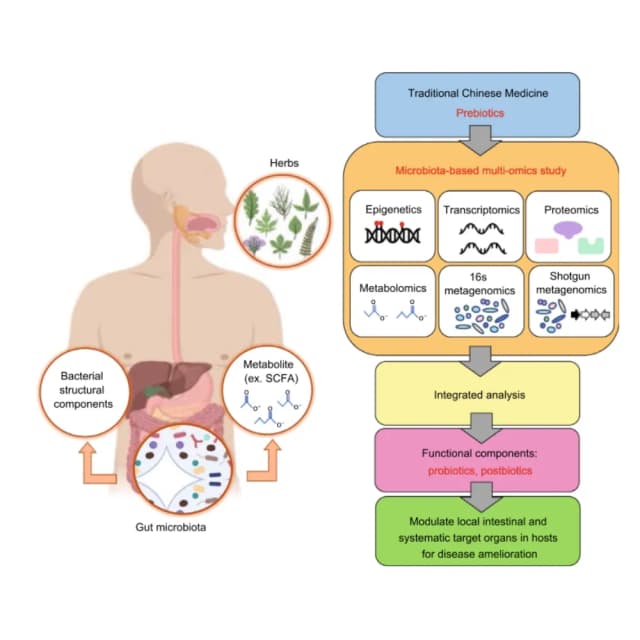
Traditional Chinese medicine (TCM) excels via multi-component, multi-target and multi-pathway effects, yet complex composition, unclear mechanisms and difficult quality control limit its globalization. Active-content levels vary strongly with origin, processing and storage, affecting efficacy stability. Metabolomics—focusing on overall small-molecule changes—reflects phenotype and TCM intervention more directly than genomics/transcriptomics, becoming a core tool to elucidate TCM material basis, mechanisms and quality standards, shifting research from experience- to data-driven.
Principle Introduction
TCM metabolomics captures dynamic metabolite changes by high-throughput technology and interprets them bioinformatically, in two directions: untargeted (no preset targets, global scan, for unknown active components, differential discovery and biomarker mining) and targeted (precise quantification of known metabolites such as ginsenosides and paeoniflorin for quality control and efficacy evaluation). They complement each other.
Literature
In "Selection of appropriate post-harvest processing methods based on the metabolomics analysis of Salvia miltiorrhiza Bunge" (Food Research International), full-spectrum TCM metabolomics analyzed Danshen from Shandong, Shaanxi and Sichuan under different post-harvest processing (fresh-cut, moisture-retained cut, steam). Of 101 metabolites (56 phenolic acids, 45 tanshinones), enzymatic browning was the key factor reducing phenolic acids; high-temperature enzyme-inactivation steaming best preserved them, guiding standardized processing.
Sample Requirements
≥2 g, snap-freeze −80°C; dry ≥1 g, sealed moisture-proof;
≥1 g, ground; decoction ≥10 mL, −80°C;
fresh ≥1 g (min ≥0.6 g), mix ≥3 same-phenotype plants.
Deliverables
Raw data
instrument raw files, identification spectra, raw statistics.
Supplementary
differential list, pathway maps, MS-match mirror plots for publication.
FAQ
≥6 biological replicates per group (≥30 clinical cases) for statistical power.
~4–6 weeks to basic report; +2–3 weeks for deep mechanistic analysis.
Supported—build component–metabolite–gene networks to dissect TCM mechanisms.
